Leather wallets for women
The leather wallet that turns an ordinary gesture into a repeated pleasure — made for her.


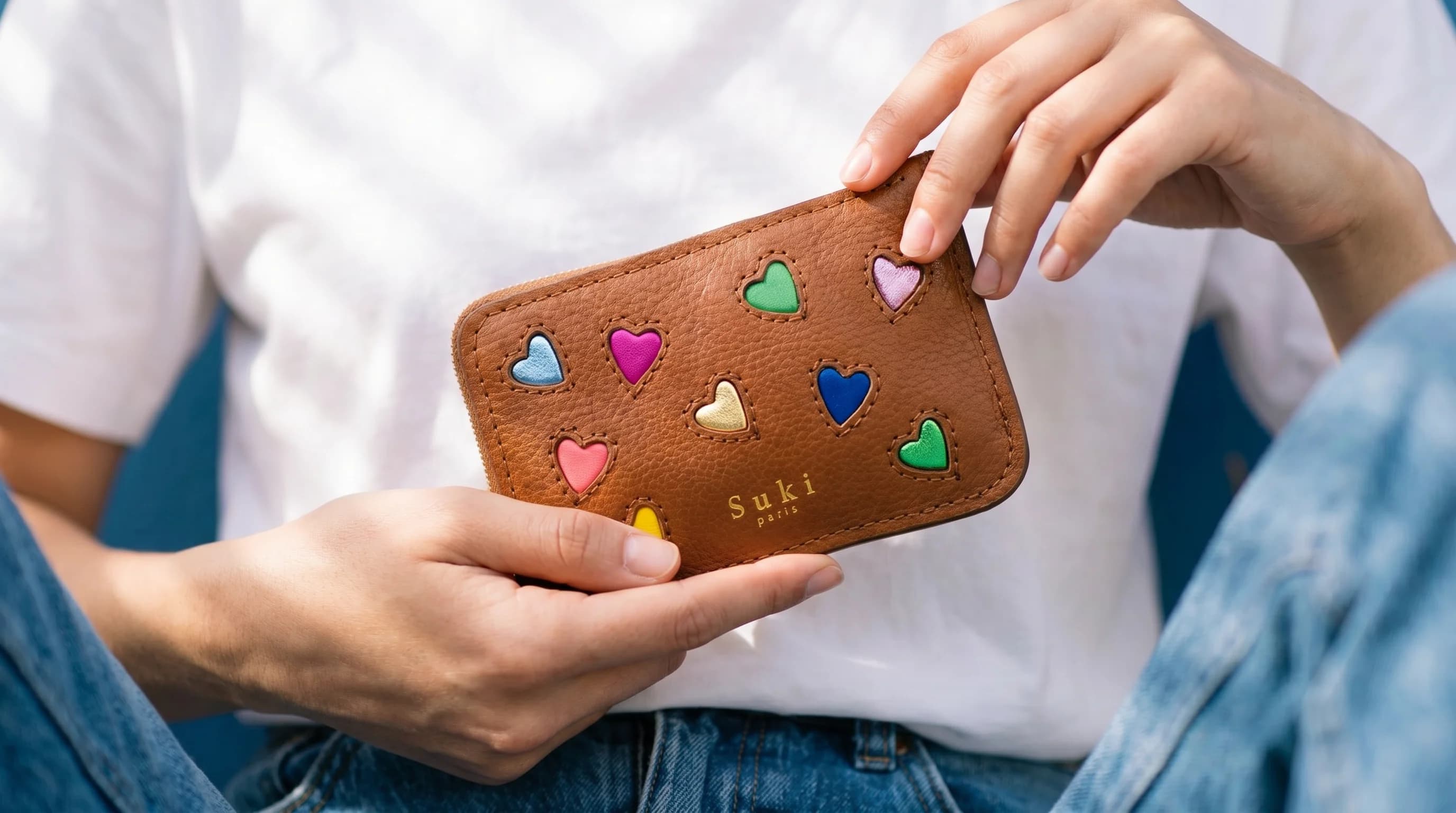


Small, not discreet.
The spirit of the collection
A women's leather wallet earns its place through small daily habits — pulling out a card at the till, keeping loose change from spilling to the bottom of a bag, finding a folded note without unpacking everything else. At Suki, four wallets stitched by hand on rue Labie share the same zipped shape and the same full-grain, vegetable-tanned cowhide, but each one carries its own leather pattern rather than a different function: Achille, Belize, Naxos and Freyja. Achille and Belize play with embossed curves and topstitching, Naxos comes in six colours, Freyja leans into a single strong shade. The choice, in the end, comes down to style rather than capacity.
The models
+
The models
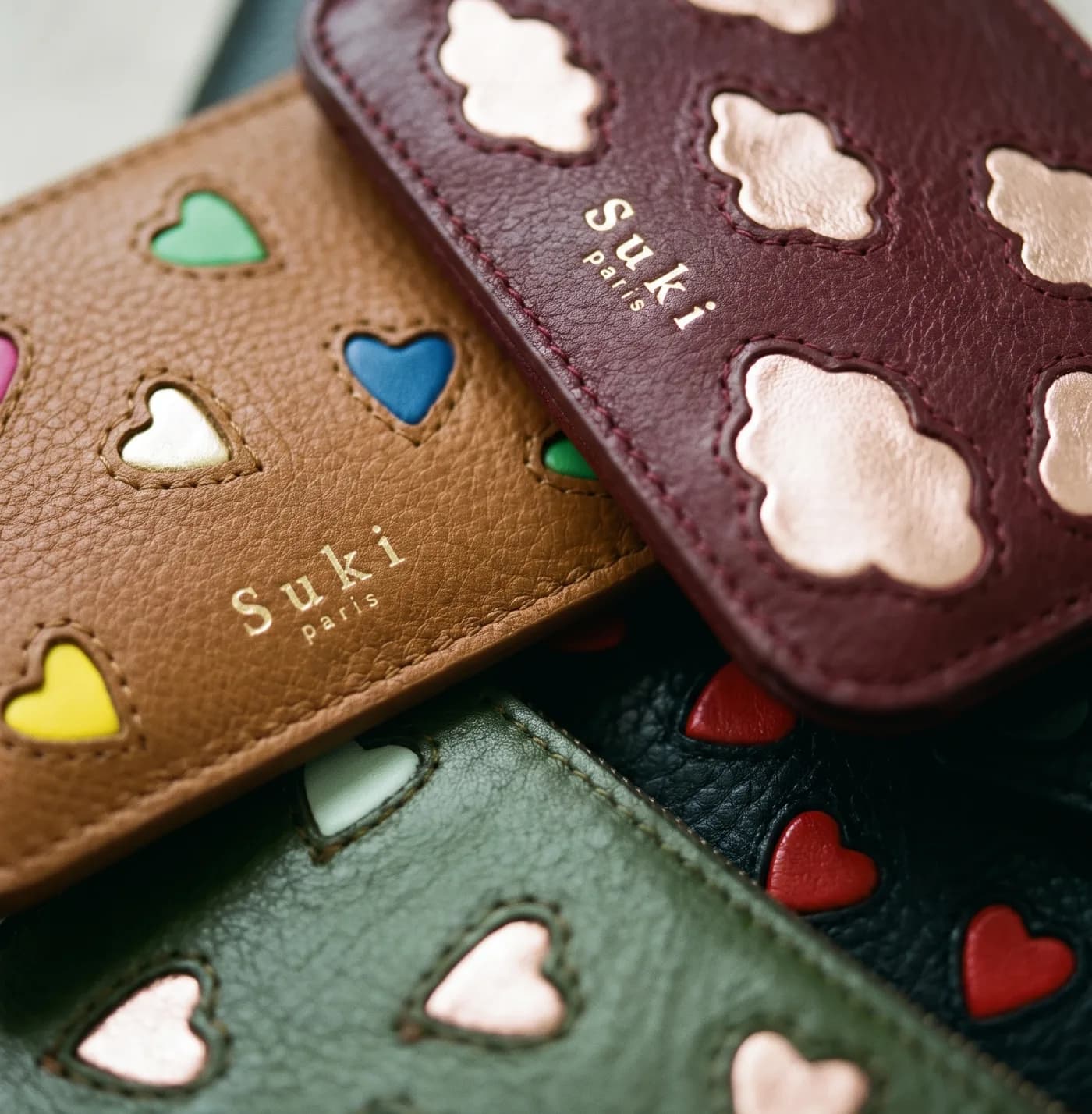
All four wallets hold exactly the same content: four cards in dedicated slots, folded notes and coins in two separate inner compartments, closed by a single gold-finish Excella YKK zip. What changes from one to the next is the leather pattern — embossed curves on Achille, contrasting appliqué on Belize, six colourways on Naxos, a seasonal palette on Freyja. Naxos comes in six colours, Achille and Freyja in three: a choice of shade before a choice of function.
Choosing
+
Choosing
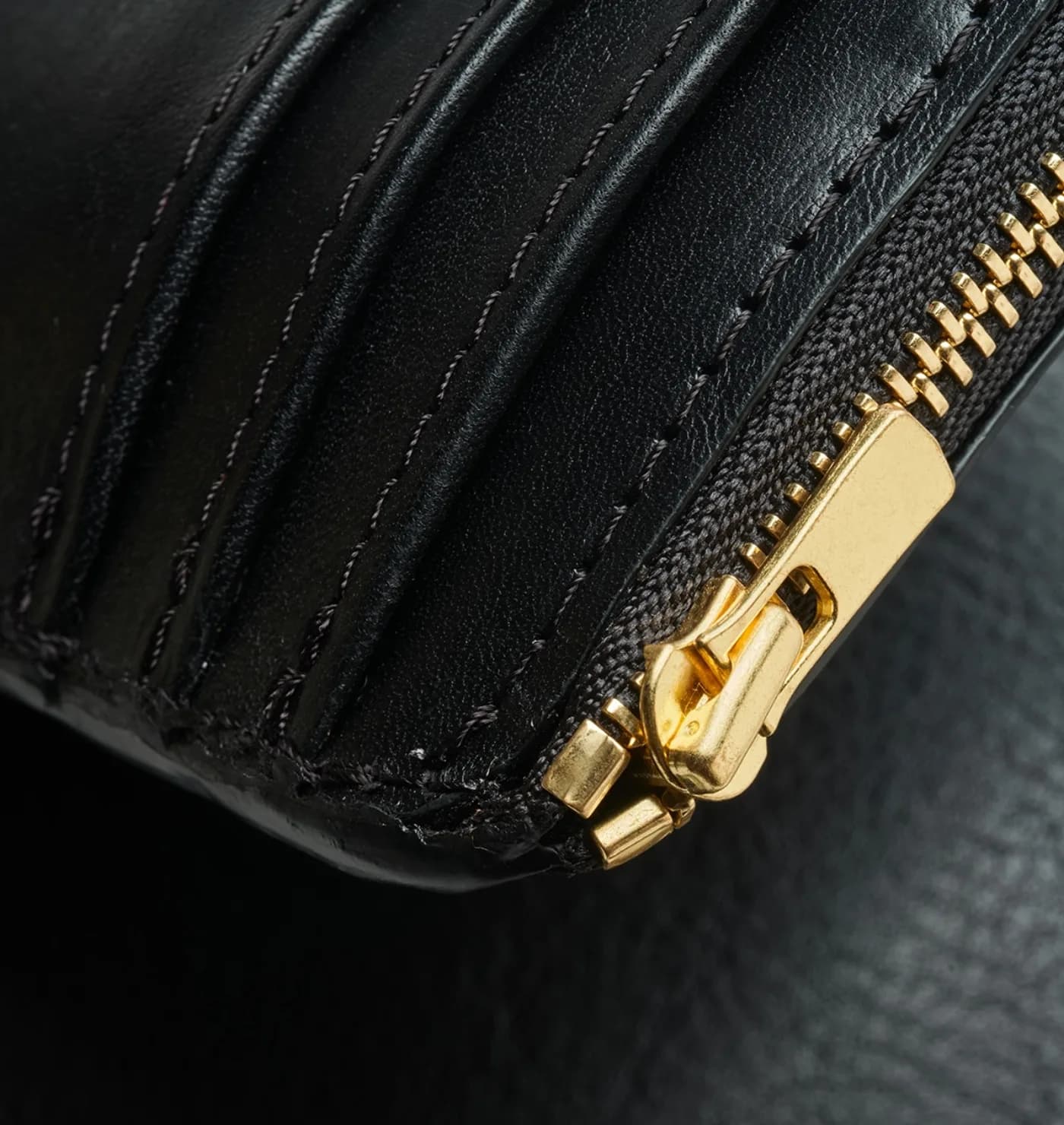
Choosing a leather wallet starts with the closure. Every Suki wallet is zipped — there's no flap style in the current range: a single gold-finish Excella YKK zip closes all four compartments in one motion and keeps coins from escaping at the bottom of a bag. A flap wallet opens faster for a single card; a zipped wallet protects the whole contents better. That's the trade-off Suki has settled on for its four models.
The second thing to weigh is the pattern. A handmade wallet from a Paris workshop isn't meant to stay neutral: Achille and Belize favour topstitching and embossing, Naxos multiplies the shades, Freyja treats colour as its signature. The third, often overlooked, is personalisation — an engraved wallet with initials stops being an interchangeable accessory and becomes something identifiable.
In practice, most buyers already own one wallet and are choosing a second, or replacing one that has worn out. A zipped wallet like this one suits daily use — commuting, running errands, travelling — better than an occasion piece kept for evenings out; the gusset and the two compartments are built for a wallet that gets opened several times a day.
Material and workshop
+
Material and workshop

All four wallets are cut from full-grain cowhide, vegetable-tanned and milled in Italy — a chrome-free tanning process using oak or chestnut bark, which leaves the leather with its natural grain and lets it develop a patina instead of simply wearing out. On Achille and Freyja, part of the leather comes from upcycled stock, depending on availability — dormant hides brought back into production rather than discarded. Inside, a waterproof nylon lining protects against loose coins and creased notes.
At the rue Labie workshop, in Paris's 17th arrondissement, every wallet goes through the same steps: cutting the pieces, embossing or layering the pattern, topstitching on a post machine, assembling the gusset, fitting the Excella zip, then hand-burnishing the edges with wax, one piece at a time. Nothing is outsourced — the same team cuts, sews and finishes every piece, in small batches. That consistency of hand, more than the number of colourways, is what separates a handmade wallet from a mass-produced one.
Gifting
+
Gifting

A wallet makes an easy gift, provided it's made personal. At the workshop, hot-foil engraving — initials, a short name or a date, in gold, silver or blank, up to 8 characters — is done to order before shipping: the piece leaves already engraved, ready to give. The option adds €30.
Around the December holidays and Mother's Day, the two moments this gift comes up most, order one to two weeks ahead — engraving adds a step to production. A gift box comes with every order.
To put together a matching set, pair the wallet with a card holder or keyring in the same leather, from the Suki small leather goods collection — a complete gift, or one more piece to add to what she already owns.
Frequently asked questions
Which wallet colour should I choose?
- There's an old saying that a red wallet attracts money and a black one keeps it — no serious study has ever confirmed that a wallet's colour affects a bank balance. The real question is use: camel or black go with everything, forest green or burgundy make more of a statement. Naxos comes in six shades to make the decision easier.
Zipped or flap wallet?
- Suki only makes zipped wallets: a single gold-finish Excella YKK zip closes all four compartments at once and stops coins escaping. A flap style gives faster access to one card but protects the contents less well. For daily use with both notes and coins, zipped stays the safer choice.
How many cards does a Suki wallet hold?
- Four cards in dedicated slots, plus folded notes and coins in two separate inner compartments, all closed by one gold-finish Excella YKK zip. The layout is identical across all four models — Achille, Belize, Naxos and Freyja.
Can a wallet be engraved?
- Yes. Hot-foil engraving — initials, a short name or a date, in gold, silver or blank — is done at the rue Labie workshop on every order before shipping, for €30, up to 8 characters.
Does the leather age well?
- Yes. Full-grain, vegetable-tanned cowhide develops a patina rather than wearing out: the surface darkens slightly and gains character over the years. A waterproof nylon lining protects the inside from coins and damp.
Does it fit in a small bag?
- Yes. At 12.5 × 8.5 cm, it fits inside an Ulysse or Pandora belt bag as easily as the smallest evening bag, without taking up all the space.
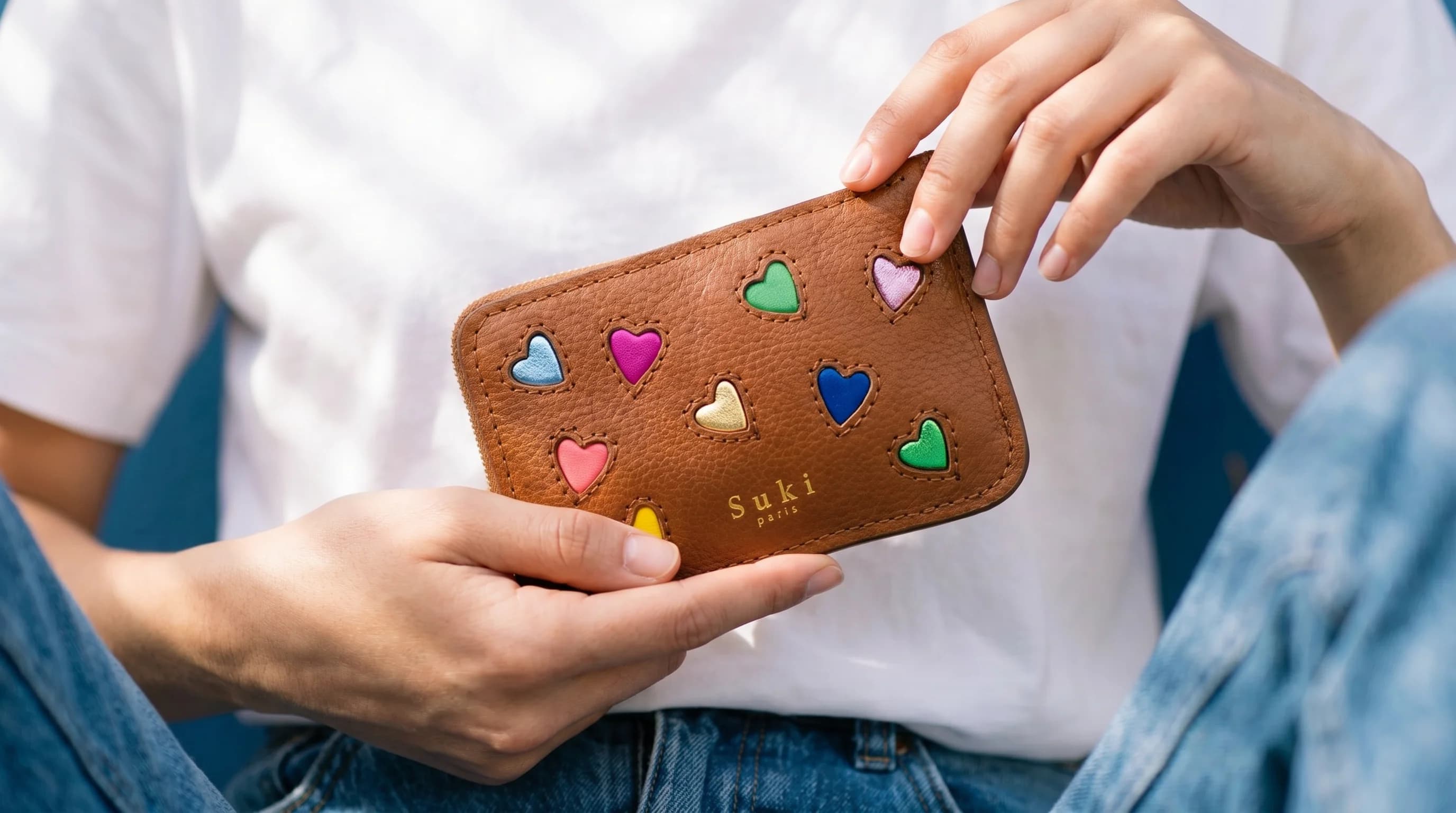
GO FURTHER
Complete the kit
A bag to slip it into, a pouch to go light, a card holder to keep things minimal. All in vegetable-tanned leather, made on Rue Labie.


