French leather goods, hand-sewn in Paris
Everything is hand-sewn on rue Labie, in the 17th arrondissement of Paris — no outsourcing, no imports.


The spirit of the collection
French leather goods are pieces designed and made in France — as opposed to brands that design here and produce elsewhere. At Suki, the house founded by Amandine Simon, the rule is simple: one atelier, and every piece leaves it finished.
Made entirely in Paris
+
Made entirely in Paris
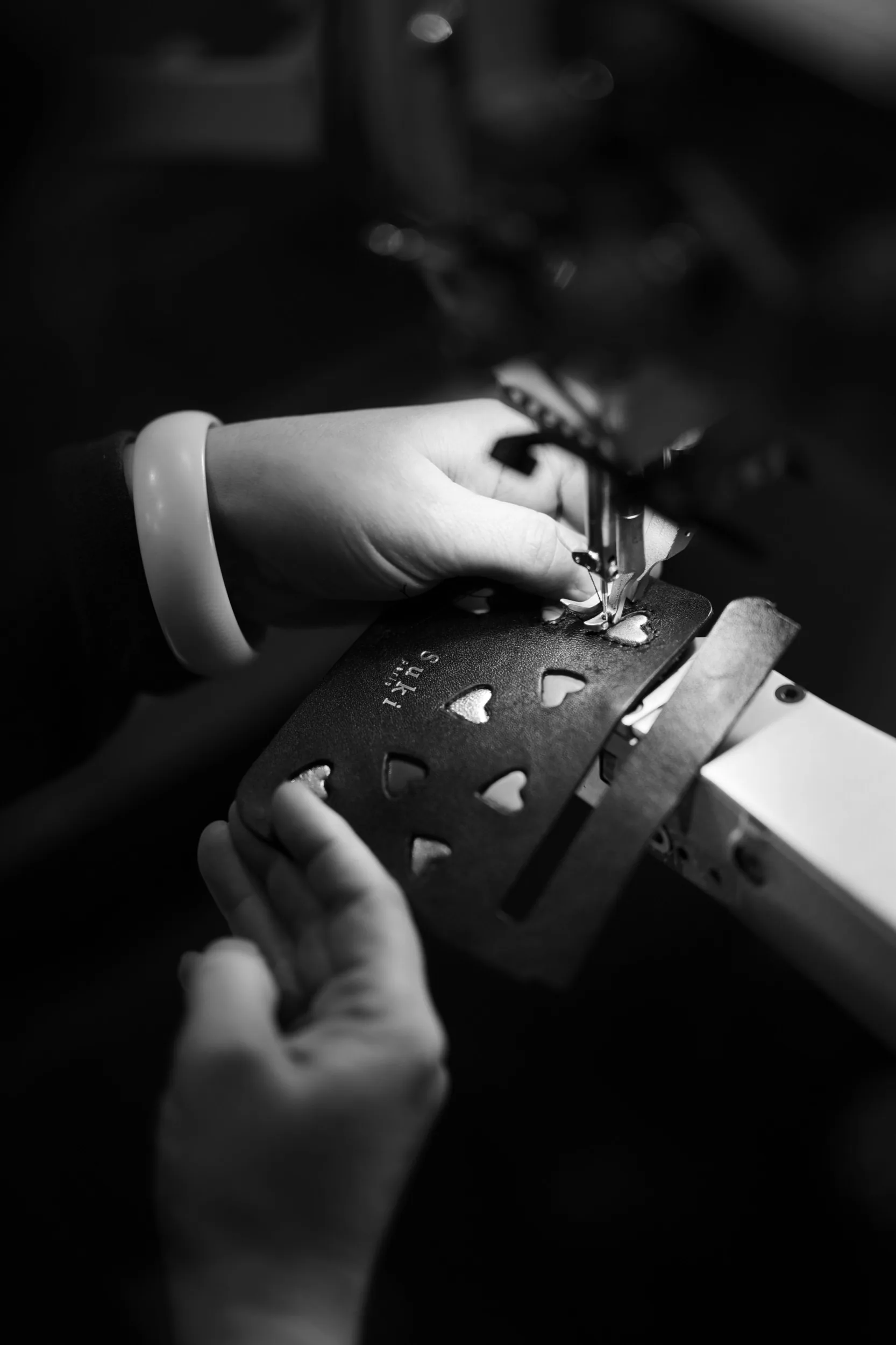
Cutting, leather marquetry, sewing, edge dyeing: every step happens at the same workbench, piece by piece, in small batches. Motifs are inlaid into the thickness of the leather, never glued — they cannot fade. Down to the leather-wrapped snap buttons, a signature of the house.
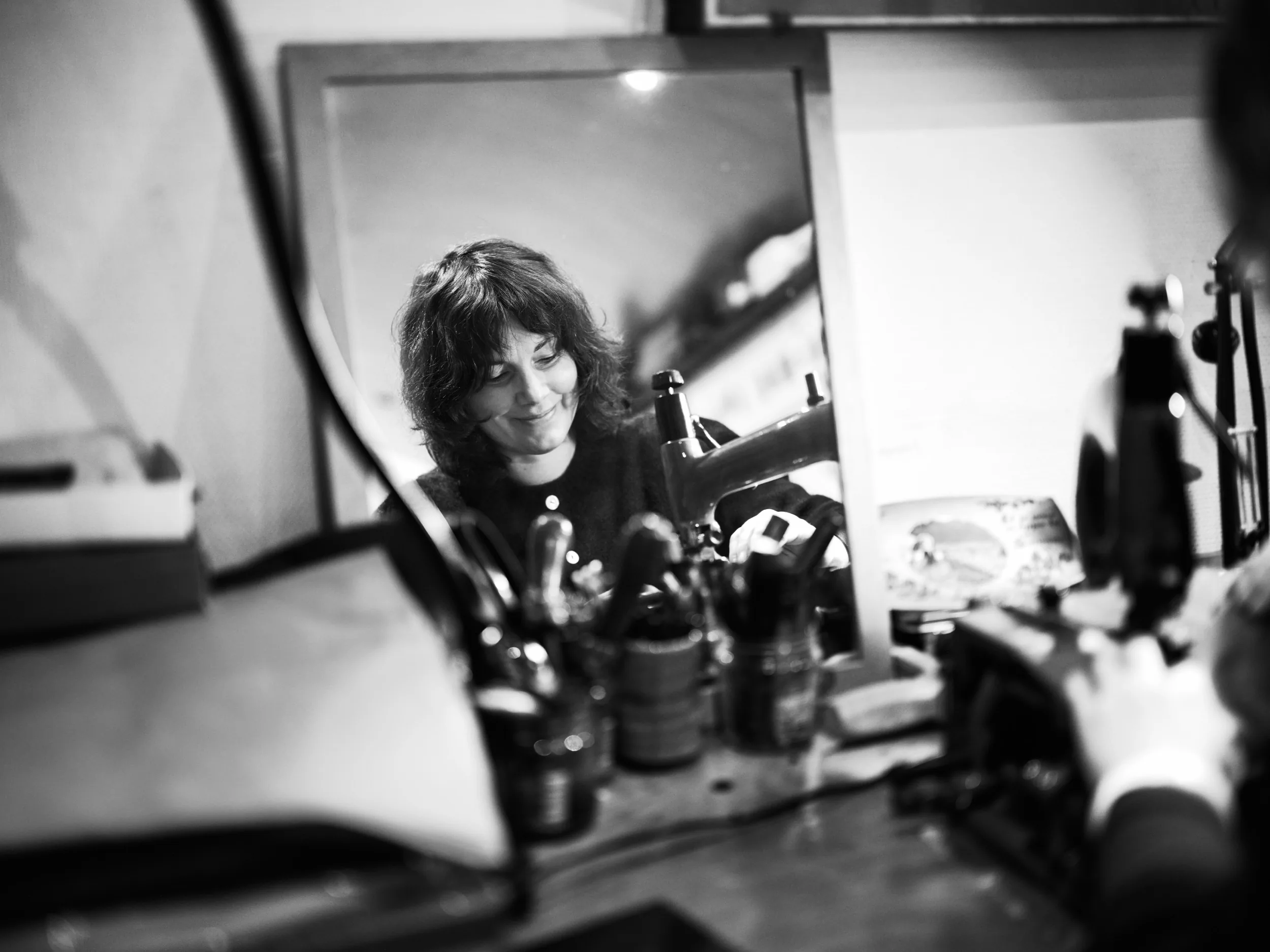
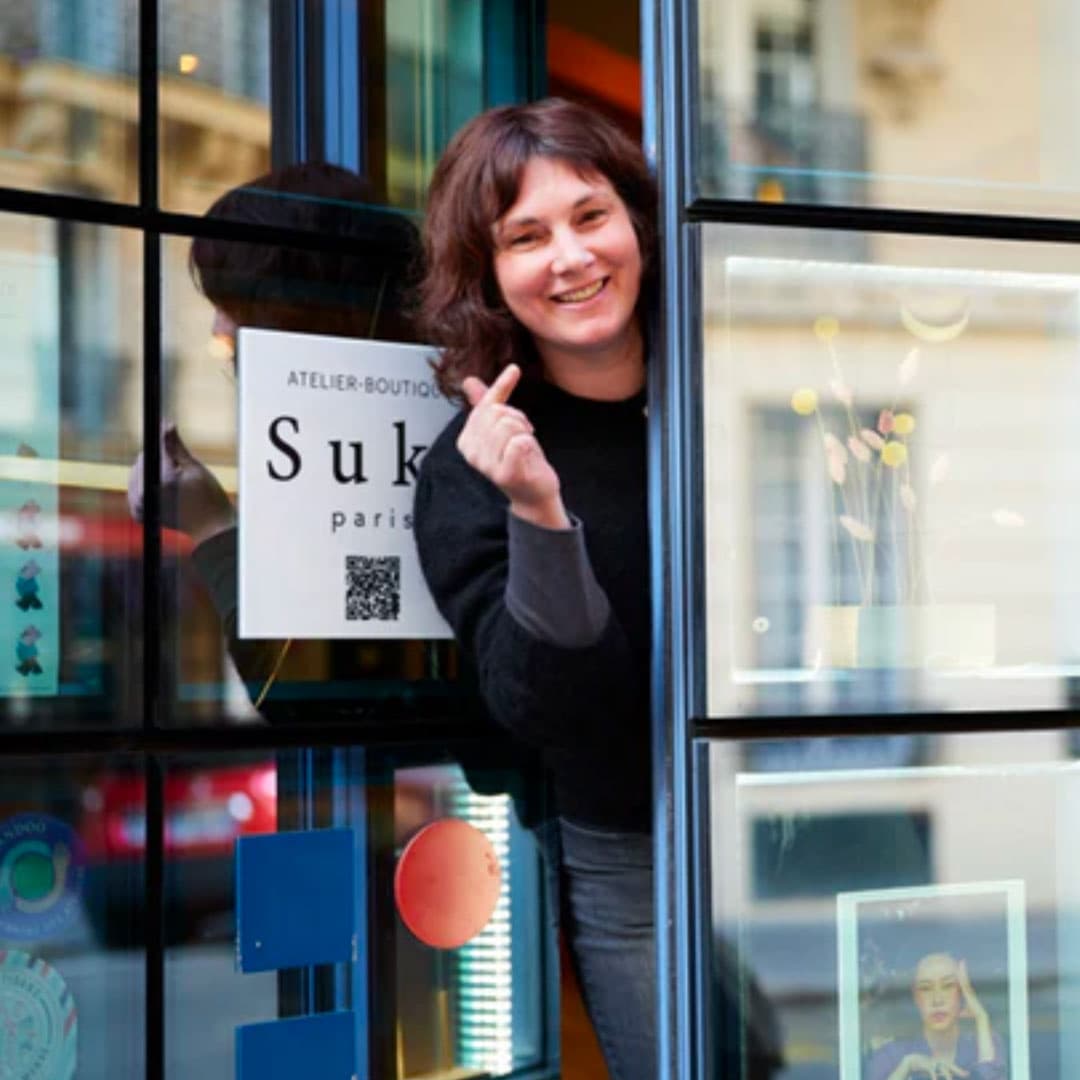
The atelier is also a shop and pick-up point: you know who sewed your bag, and where to return for an engraving or care advice (visit the atelier).
Leathers chosen to last
+
Leathers chosen to last
The raw material is full-grain, vegetable-tanned cowhide — the noblest part of the hide, the one that develops a patina (full-grain vs corrected grain). The hides come from European tanneries committed to responsible practices: the appellation guarantees where a piece is made, not where the leather comes from — true of the great houses as well.
The water-resistant nylon linings follow the same standard: the inside ages as well as the outside (our guide to French leather craftsmanship).
Five families, one same gesture
+
Five families, one same gesture
The range covers everyday leather goods: handbags — including the woven Altaï bucket bag —, belt bags with zip closure, passport pouches in envelope format, zipped coin wallets with inlaid motifs and card holders with hand-dyed edges.
Every piece can receive a custom engraving — gold, silver or blind: initials, a date, a short word. It is done in the Paris atelier that sewed the piece — a gift no mass production can replicate.
What to look for in a French leather brand
+
What to look for in a French leather brand
Four questions separate a French brand from a French label:
- Where the design happens — and where the making actually happens
- One atelier, or a chain of subcontractors
- The leather: full-grain, vegetable-tanned, traceable
- The finishing: edge dyeing, stitching, hardware
At Suki Paris the answer is one address — 6 rue Labie, where each piece is cut, stitched and finished by hand before it ships.
Frequently asked questions
What are French leather goods?
- Leather pieces designed and made in France. At Suki Paris the rule goes further: one single atelier, rue Labie in Paris 17th, from which every piece leaves finished — no subcontracting, no imports.
Are the pieces really made in France?
- Yes. Cutting, marquetry, sewing and edge-dyeing all happen at the same Parisian workbench, in small series. The leather — full-grain, vegetable-tanned cowhide — comes from Italian tanneries; the making is entirely French.
Can a piece be personalised?
- Yes. Every piece can receive hot-stamping in gold, silver or natural — initials, a short name or a date — carried out at the atelier on your order, before dispatch.
Can you visit the atelier?
- Yes. The atelier at 6 rue Labie, Paris 17th, houses a shop and serves as a pick-up point for orders. You can see the pieces, the leathers and the bench where they are sewn.
Which leathers are worked at the atelier?
- A full-grain, vegetable-tanned cowhide of Italian origin, which develops a patina over time, and a smooth upcycled leather depending on stock on certain models. Wallet and passport-holder linings are tough, waterproof nylon.


