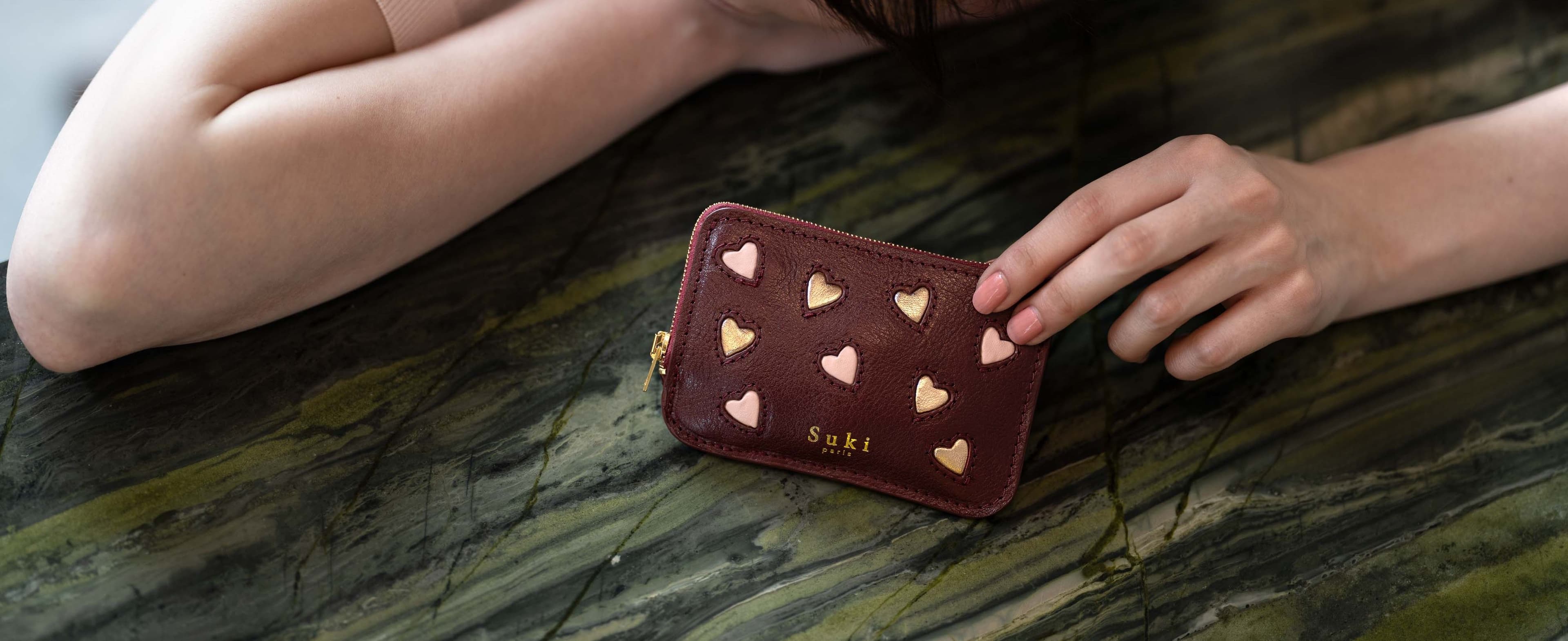
Craft leather goods: how to choose a piece built to last
A handcrafted leather piece can survive twenty years of daily use without losing its shape or its character. Most items sold as "artisanal" are nonetheless produced on semi-industrial lines where manual gestures are limited to final assembly. Knowing the difference protects your budget and points your purchase toward something that ages well.
The problem: the visible signals — colour, price, packaging — say nothing about real durability. It is the material, the construction, and the finishing that determine whether a piece will hold.
In this guide, you will find concrete checkpoints for evaluating a leather craftsperson's work before you buy, from the choice of hide to the details of assembly.
Key takeaways
- Full-grain leather with vegetable tanning is the reference material for durability: it develops a patina without degrading.
- Vegetable tanning takes several weeks; chrome-tanned leather is ready in hours — the difference shows in how each ages.
- Hand finishing (hand-dyed edges, leather-wrapped press studs, even hand stitching) reveals the level of attention given to each piece.
- The provenance of the hides matters as much as the assembly: European tanneries committed to responsible practices guarantee real traceability.
- No outsourcing is a strong signal: a workshop that manufactures on-site controls every step and stands behind every flaw.
- Engraving or personalised marking — gold, silver, or natural — is only possible on full-grain leather of sufficient quality to accept heat without scorching.
- A good craftsperson documents their work: a visible workshop, demonstrable techniques, traceable materials.
What sets a leather craftsperson apart from a conventional manufacturer?
A leather artisan produces in small runs in an identifiable workshop, using selected materials and repeating each gesture piece by piece. The difference is not only one of scale: it is a logic of direct responsibility for every object made.
What does workshop manufacturing actually mean in practice?
Making things in a workshop means every step — cutting, assembly, finishing — is carried out by hands that can correct in real time. There is no production line advancing without intermediate checks. A cutting flaw is caught before assembly; an uneven edge is reworked before dyeing.
This produces pieces that are slightly variable — which is precisely a sign of genuine manufacture. Two wallets from the same workshop will never be strictly identical.
How do you spot hidden outsourcing?
Several signals suggest a production that has been externalised but presented as artisanal:
- Very broad range: a human-scale workshop cannot produce 200 references without outsourcing.
- Stock always available in every colour and size: incompatible with small-run production.
- No visible or visitable workshop: brands that genuinely make things are generally happy to show where.
- Very low prices for announced premium materials: vegetable tanning and local labour have an irreducible structural cost.
How does run size affect quality?
Small runs and quality are linked by a simple constraint: when a craftsperson produces twenty pieces a week rather than two thousand, the cost of careful inspection is absorbable. The pressure of throughput does not exist in the same way. Each piece is also the direct reputation of the person who made it.
How do you assess the quality of the leather used?
Leather is the single most determining variable for durability. A full-grain, vegetable-tanned hide will age better than a corrected, chemically tanned one, regardless of assembly quality. Evaluating the material is therefore the first reflex to develop.
What is the difference between full-grain and corrected-grain leather?
Full-grain leather retains the natural surface of the hide, with its slight irregularities. Corrected-grain leather is sanded and coated to mask flaws — giving it a uniform appearance but removing its ability to develop a patina. For a detailed comparison, the full-grain vs corrected-grain leather guide covers the visual and tactile differences.
How do you identify vegetable tanning at the point of purchase?
Vegetable tanning produces a leather that is:
- Slightly translucent on the cut edge — the cross-section is clean, not plasticised.
- Firm but supple — it does not stiffen or crack at the fold.
- Reactive to water — a drop leaves a temporary mark that disappears as it dries (a sign the leather has not been over-treated).
- Distinctly scented — the vegetal-tannic smell is recognisable and absent in chrome-tanned hides.
A serious craftsperson will always state the origin of their hides. European tanneries committed to responsible practices guarantee full traceability from animal to finished piece.
What should you make of upcycled or recycled leather?
Upcycled leather — made from production offcuts — is a coherent option for small-surface pieces (key rings, small accessories). Quality depends on the selection of those offcuts: a rigorous artisan retains only pieces free of structural flaws. The result is often comparable to new leather on small formats.
Which construction techniques guarantee longevity?
Material alone is not enough: poor construction will degrade good leather within a few years. Assembly techniques, edge finishing, and how hardware is fixed all determine how well a piece holds over time.
Why do edge finishes reveal an artisan's level?
The edges — the cut borders of the leather — are the zone most exposed to wear. A skilled leather craftsperson works them by hand: dye, burnishing, several passes. A well-finished edge resists fraying and moisture. An edge that is simply painted or left raw will fray quickly at friction points.
This is a detail you can check at purchase, even from a photograph: look for a smooth, even edge with a slight sheen on the border.
How do you assess stitching quality?
On a handcrafted leather piece, stitching should show:
- Even stitches, of the same length and the same tension from end to end.
- Resistant thread — waxed linen or technical polyester — visible and unfrayed at the ends.
- Parallel topstitching where the design calls for it: the gap must be consistent throughout.
- No thread cut flush: ends must be finished (knotted, burned, or backstitched) to prevent the seam from unravelling.
A well-stitched card holder or leather wallet will withstand several years of daily openings without the seams gaping.
How reliable are artisanal fastening systems?
Fastenings are the point of most intense mechanical stress on a leather piece. The options found among serious craftspeople include:
- Leather-wrapped press studs: the stud is protected, so the metal does not rub directly against skin or cards.
- YKK Excella zip: the standard reference in quality leather goods, with a smooth, wear-resistant slider.
- Flap with integrated magnetic closure: discreet, with no visible metal.
Avoid bare exposed metal press studs on fine pieces: oxidation will eventually stain the surrounding leather.
How do workshop location and traceability affect your purchase?
A leather craftsperson rooted in a specific place, with documented techniques and traceable materials, offers an implicit guarantee that industry cannot: the ability to return to the source if something goes wrong. Quality French leather goods often rely on this local grounding as a central argument — rightly so.
Why is the workshop address a trust signal?
A workshop with a real address — visitable, listed on the website, open to the public or by appointment — signals an assumed physical activity. Brands that genuinely make things have no reason to hide the location. Many even offer a click-and-collect service on-site, which lets you see the production conditions and meet the people who make the pieces. For those looking for a specific example, the Belize is one model that can be collected directly from the workshop.
Is personalisation an indicator of quality?
Yes, directly. Offering personalised engraving — gold, silver, or natural — requires a full-grain leather of sufficient quality to absorb the heat of the iron (at 100 °C for a clean, permanent mark) without scorching or deforming. A corrected or coated leather reacts poorly to heat: the surface blisters or darkens unevenly. Engraving is therefore an indirect test of material quality.
Good practice for choosing without getting it wrong
Before confirming a purchase from a leather craftsperson, here are the five checks to carry out systematically.
- Ask for the provenance of the leather — tannery, country, tanning method. A serious artisan answers without hesitation.
- Examine the edges — hand-dyed, smooth, no visible fraying even in product photos.
- Find the workshop — physical address, photos of the production space, option to visit or collect in person.
- Check the range — a tight range is compatible with genuine artisanal production; a hundred references generally is not.
- Test the after-sales or repair policy — a craftsperson who repairs what they make trusts their own construction.
Common mistakes to avoid
- Confusing "handmade" with "artisanal": labelling something "handmade" when industrial assembly is partially finished by hand is legal in many contexts — read product descriptions carefully.
- Relying solely on price: a high price does not guarantee artisanal manufacture; a reasonable price does not disqualify it either.
- Ignoring interior finishes: the lining, interior stitching, and finishes invisible during use reveal the care given to the whole piece, not just the visible face.
- Neglecting maintenance: good leather that is poorly maintained degrades faster than ordinary leather that is well nourished. Ask about recommended care before you buy — a soft dry cloth, a silicone-free nourishing cream applied sparingly, and storage away from sunlight are enough for the vast majority of vegetable-tanned leather pieces.
Frequently asked questions
What is the difference between an artisanal piece and an industrial "luxury" piece?
An artisanal piece is produced in small runs in an identifiable workshop, with real traceability of materials and manual intervention at every stage. An industrial luxury piece may use comparable quality materials, but the scale of production involves compromises in the consistency of quality checks. The main difference shows in the slight variability between pieces and in the possibility of speaking directly to someone when there is a fault.
How long should a handcrafted vegetable-tanned leather piece last?
An article in full-grain, vegetable-tanned leather, well maintained, easily lasts ten to twenty years with daily use. The leather becomes denser over time and develops a patina unique to each owner. Actual lifespan depends on the quality of the stitching and fastenings as much as on the material itself.
Can a handcrafted piece be personalised after purchase?
It depends on the workshop. Some craftspeople offer an engraving service after sale — gold, silver, or natural — on presentation of the piece. The condition is that the leather must be full-grain and in good condition: a surface that is too worn or coated with a film-forming product will not accept heat evenly. Ask the workshop directly before purchasing if personalisation is an important criterion. Among the small accessories suited to personalisation, the Belize coin purse is an example of a compact format offered by some workshops.
How do you maintain a vegetable-tanned leather piece so it lasts?
Three gestures are enough: clean with a soft dry cloth, nourish two to three times a year with a silicone-free colourless cream applied in a thin layer, and store away from sunlight — ideally in the cotton pouch supplied with the piece. For more detail, the leather bag care guide covers care by finish type and frequency of use.

FOUNDER & LEATHER ARTISAN
Amandine Simon
Founder of Suki Paris, Amandine crafts every piece by hand in her workshop in the 17th arrondissement.


