24 Hours Inside a Leatherwork Workshop in Paris
A Day Inside a Leatherwork Workshop in Paris
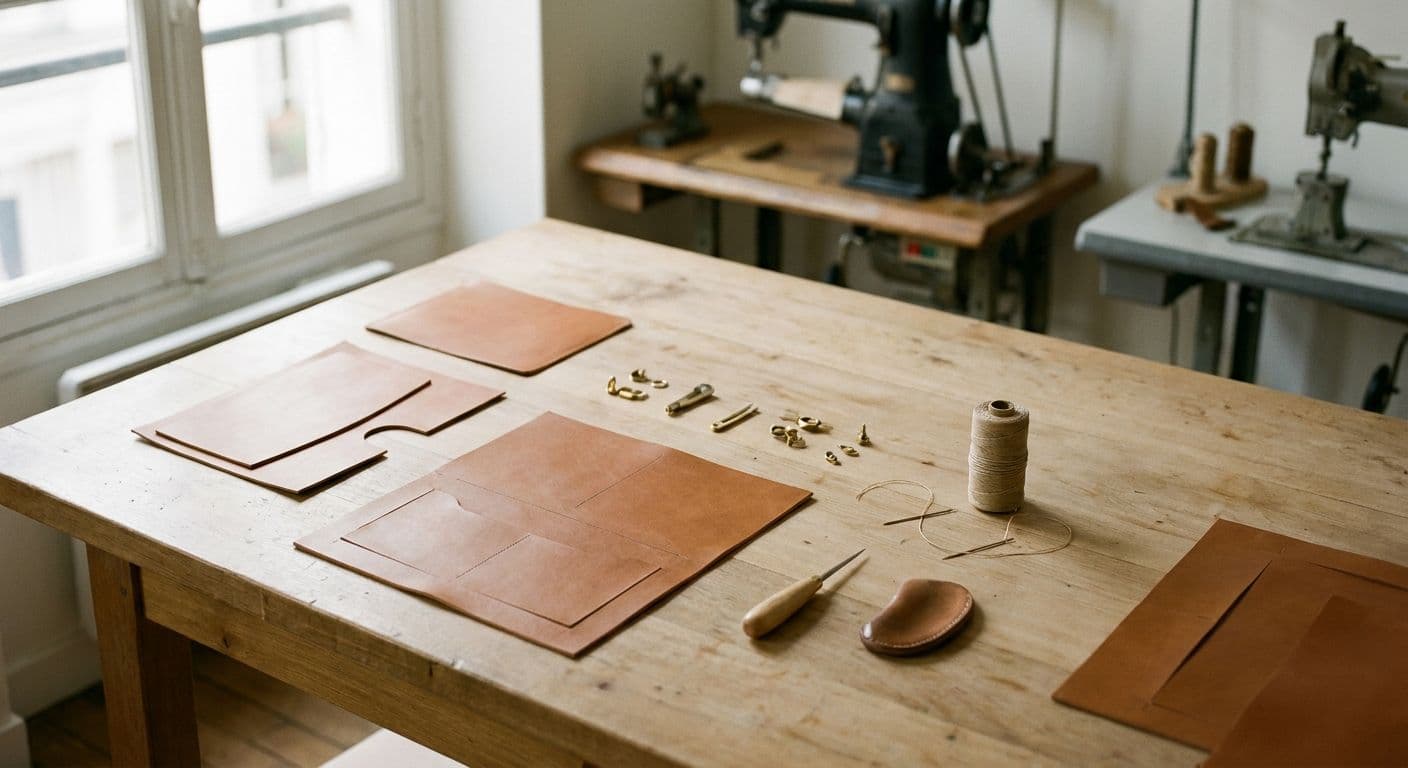
This article documents a full day in our leather goods workshop in Paris, on rue Labie in the 17th arrondissement. No staging: these are the real gestures, in the order they unfold from morning to late afternoon. Selecting hides, cutting, braiding, hand stitching, hot stamping — everything that leaves the workshop passes through these steps, carried out in this order.
This piece of French leatherwork is born in a single Paris workshop, one you can discover on the about page.
It is 8:30 am. The workshop still smells of coffee and cold leather. Before the day truly begins, there is this moment — the only one that resembles silence.
I set down my bag. I switch on the light above the workbench. And something, in that precise order, reminds me why I chose this work over any other.
8:30 am — The silence before the gesture
The workshop is sixty square metres. The walls are painted off-white; the workbenches are pale and wide. On the shelf at the back: the week's hides, rolled or laid flat depending on their thickness.
We do not start straight away. There is a mental preparation that looks like nothing — tidying, checking, setting out the tools for what we decided to make the evening before.
A craftsperson who starts well starts slowly. That is a rule I learnt by watching other workshops, in Paris and elsewhere. Morning haste always costs you in the afternoon.
10:00 am — Choosing today's hide
We do not work with whatever leather is to hand. We choose the hide for the piece to come.
The leathers we use at Suki come from Italy. They are vegetable-tanned hides — a slow process, six weeks at minimum, which gives the leather its density and its ability to age with grace. We do not choose this process for marketing reasons. We choose it because it is the only one that produces this finish, this firmness, beneath the hands.
Every hide has its own character. A slight irregularity in the grain here. A softer area there. That is not a flaw — it is proof of something living. We cut with those variations in mind. The most beautiful part of the hide goes where it will be most visible.
This morning, it is a camel hide. Firm, dense, with that faint gold tone that only exists on well-selected vegetable-tanned leathers.
12:00 pm — Today's pieces on the workbench
We do not work on everything at once. The workshop runs on two or three pieces in progress, never more. Enough to keep the pace steady, not so many that focus slips.
This afternoon, there is an Altaï bucket bag in the skiving stage — we thin the edges down to a third of their thickness so the seams do not sit too thick. And a Ulysse at the topstitching stage.
Skiving is one of the least spectacular and most critical gestures. A hide at 2.5 mm thickness cannot turn a corner without warping. We skive down to 0.8 mm on the areas that will flex. It is invisible on the finished piece. But if you skip it, you feel it — the leather is stiff where it should give.
Music often accompanies our days in the workshop. It sets the rhythm of our gestures, feeds our inspiration, and is a part of our world. But behind every note, full attention remains. Working with leather demands listening to the material and the tools: the glide of the blade as it cuts, the steady sound of the sewing machine, the precise snap of a punch. Familiar sounds that guide the gesture and bear witness to the quality of the work in progress.
Patterns and braiding
Every piece that leaves the workshop is the result of many hours of work and constant attention to detail. Before an order is dispatched, each piece is carefully checked: the alignment of patterns, the evenness of braiding, the quality of topstitching, the precision of cuts, and the harmony of colours.
Leather inlays, marquetry work, applied motifs, and braiding all demand patience and precision to reveal their full relief. Hand-dyed edges receive particular attention too, so as to achieve a clean, elegant, and lasting finish.
Because it is often the details that make the difference, we take the time needed for every piece to reflect the craftsmanship, the exacting standards, and the passion that drive the Suki Paris workshop.
The Suki signature
Among the final stages of making comes the stamping. Carried out with care, it quietly signs the piece and bears witness to its passage through the artisan's hands.
Hot stamping demands precision and mastery. Temperature, positioning, and pressure must all be perfectly calibrated to produce a clean, lasting impression without altering the natural beauty of the leather. A gesture that appears simple, yet requires experience and craftsmanship.
More than a logo, this signature is the symbol of handmade production from our Parisian workshop. It attests to the attention given to every piece, from the choice of materials through to the finishes. Every Suki Paris piece receives this mark before leaving the workshop, as the final touch of a story shaped by hand.
The time to do it right
When a piece leaves the workshop, it is the culmination of many carefully executed steps. Cutting, preparing the leather, assembling, stitching, fitting hardware, dyeing the edges, checking the finishes: every piece follows its own rhythm and takes the time it needs to reach the standard we seek.
Some pieces require several hours of work; others need more when they incorporate particular techniques such as braiding or leather marquetry. Behind every accessory lies a succession of precise gestures, repeated with patience and rigour.
At Suki Paris, we believe that a beautiful object cannot be made in haste. Taking the time to work the material, attend to the details, and check every finish is integral to our craft approach. It is this time devoted to each piece that allows it to endure through the years and develop its patina with elegance.
Why our pieces are made in our Parisian workshop
We are sometimes asked why we chose to make our pieces in our Parisian workshop, rather than outsourcing part of production.
The answer is simple: we like to stay close to every stage of making. From choosing the hides to the final finishes — cutting, assembling, braiding, dyeing the edges — every piece passes through our hands.
Working this way allows us to pay particular attention to the details, to adapt our gestures to each hide, and to check quality at every stage. Leather is a living material, with its own nuances, grain, and character. Each piece sometimes calls for small adjustments that only in-house production makes possible.
This choice is not a pursuit of perfection, but a way of preserving the bond between the artisan, the material, and the finished object. It allows us to keep creating at our own pace, with the care and exacting standards that are part of Suki Paris's identity.
All our pieces are born this way, in our workshop on rue Labie in Paris, where every piece is conceived, made, and prepared before it finds its future owner.
QUESTIONS FRÉQUENTES
Tout ce que vous voulez savoir
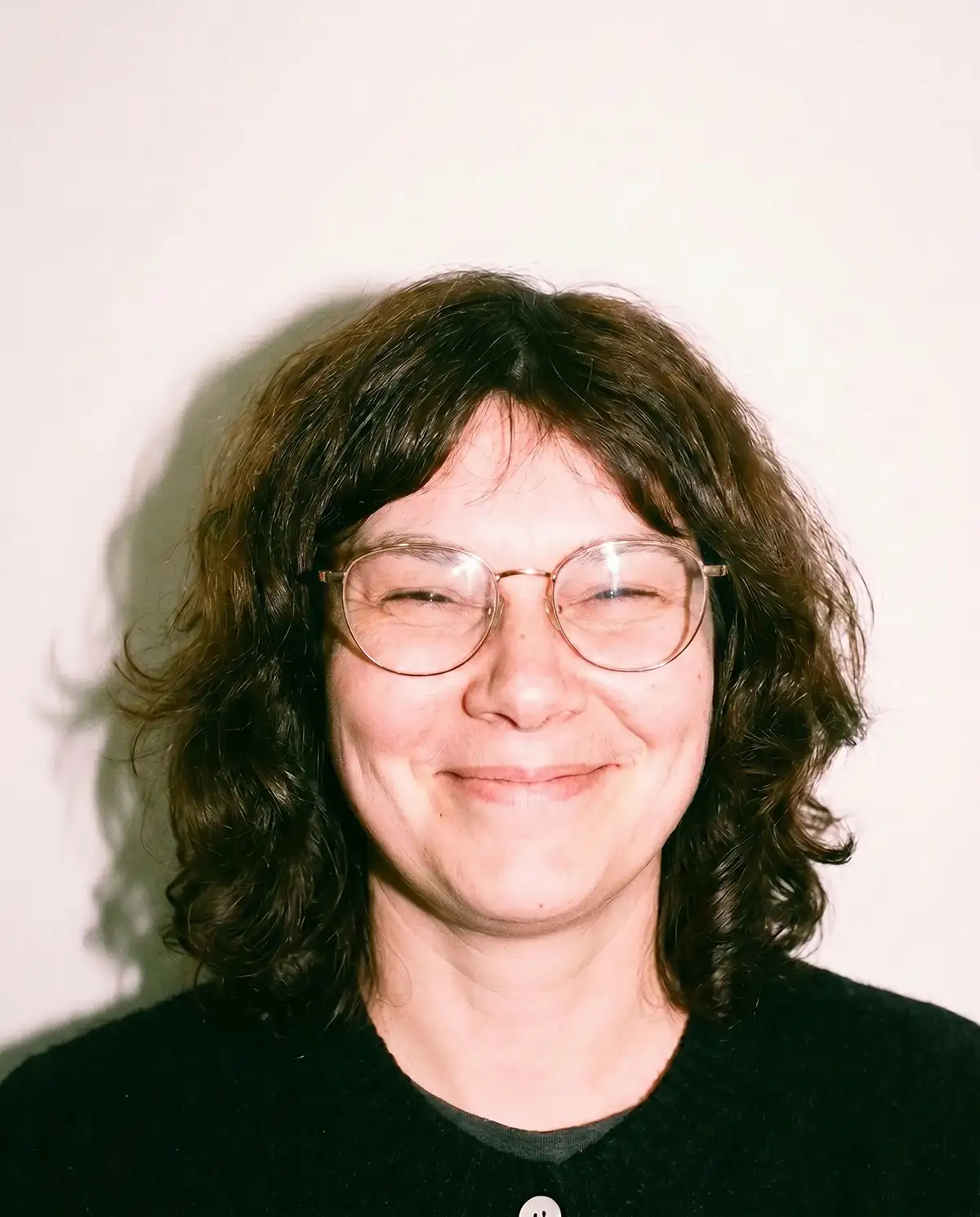
FOUNDER & LEATHER ARTISAN
Amandine Simon
Founder of Suki Paris, Amandine crafts every piece by hand in her workshop in the 17th arrondissement.
IN THE SHOP