How Many Cards Fit in a Card Holder? Choosing the Right Capacity
A leather card holder is the object you touch ten times a day without ever really noticing — until the moment it warps, frays, or refuses to release the card you've been hunting for the past thirty seconds at the checkout. This guide is here to make sure that never happens.
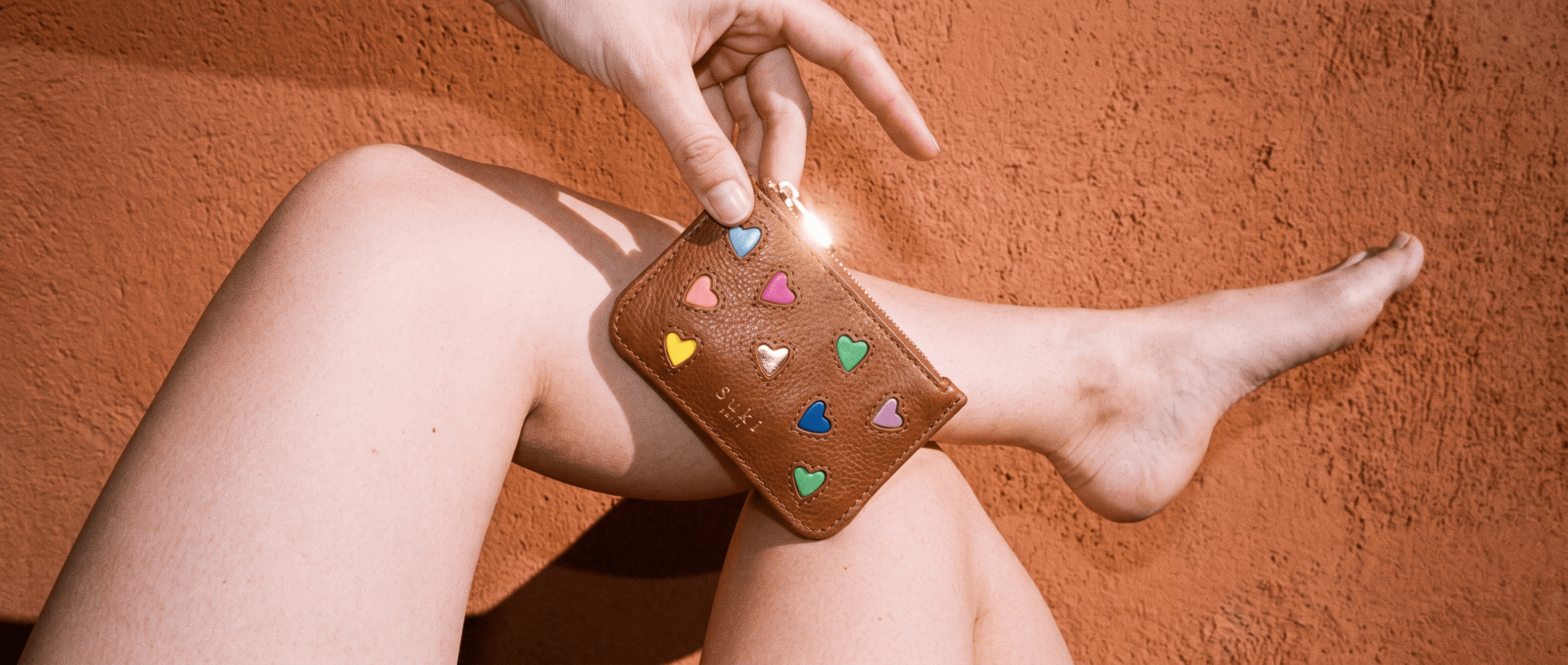
Slipped into a pocket or small bag, a leather card holder for women is chosen by how many cards you carry each day.
Choosing a leather card holder starts with understanding what you need from it: how many cards, what closure, what leather, what care. The answers are simple. You just need to have them.
How Many Cards Does a Leather Card Holder Hold?
Plastic scratches, fabric stains, leather — it patinas. That is the fundamental difference. A well-chosen vegetable-tanned leather card holder does not degrade: it evolves. The areas you touch most often darken slightly, develop a natural sheen, tell a story of use. After two years, it looks exactly like what you have made of it.
It is also a question of size. A card holder slips into a pocket, into a bag without filling it, into an evening clutch. It sits between the bulky wallet and empty pockets. For those who only need their bank card, travel card, and an ID, it is often enough.
How to choose a leather card holder: capacity, size, closure
Capacity first.
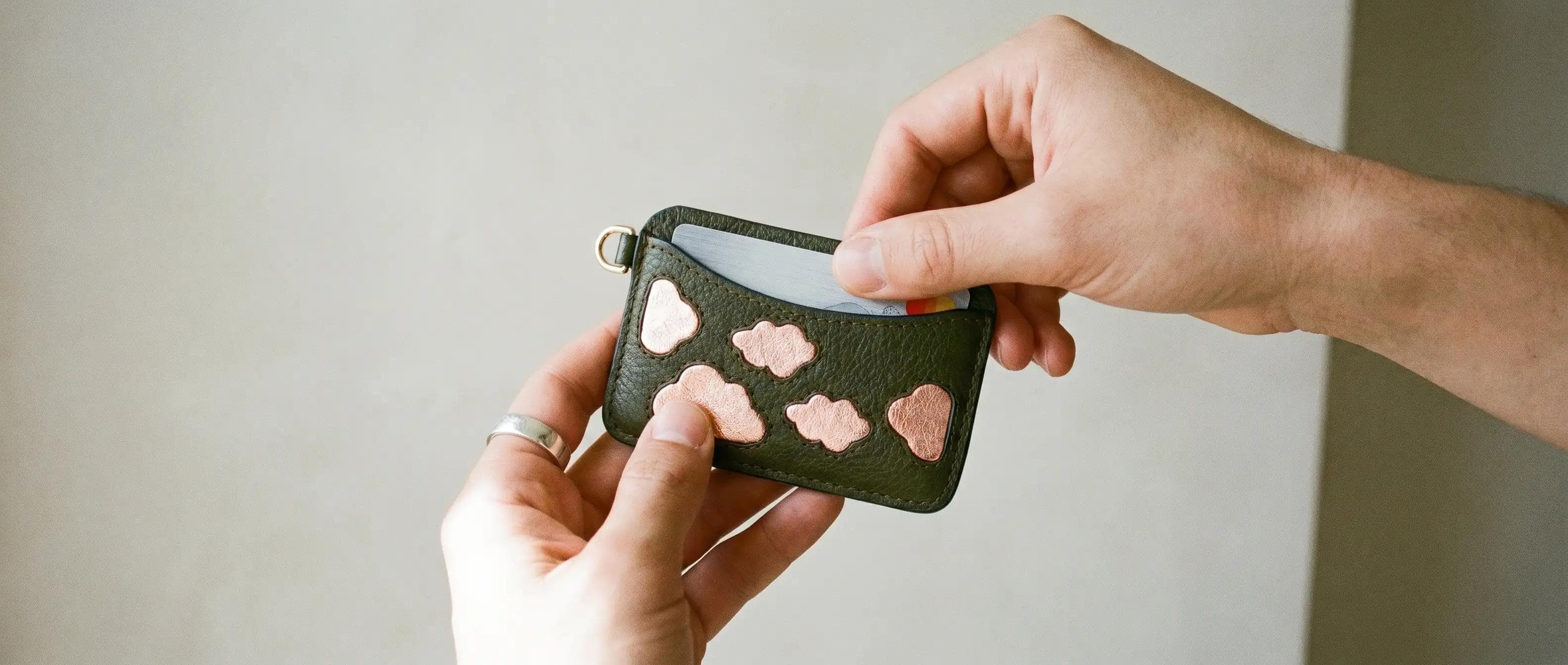
Most leather card holders hold 4 to 8 cards. Fewer than 4 is often too restrictive. More than 8 and the profile bulges, losing the advantage of the format. The ideal for everyday use: 4 dedicated slots and a central pocket for a folded note or an extra card.
Size next.
Two main families: the flat card holder (a few millimetres thick, credit-card sized or slightly larger) and the accordion card holder (which opens out, more capacity, a touch thicker). The first fits in any pocket. The second is more versatile.
Closure last.
Open (press-stud or no closure), press-stud, or zipped. An open card holder is the slimmest and quickest to use. A press-stud is a compromise. A zip secures the contents but adds a few millimetres and an extra gesture. The choice comes down to whether you tend to drop things.
Vegetable-tanned vs chrome-tanned leather: what lasts
Vegetable tanning uses extracts from tree bark and plants. It is a slow process — several weeks for premium leathers — that produces a dense, firm leather with an exceptional capacity to patina. Over time and with use, it softens slightly, takes the shape of what it holds, and deepens in colour.
Chrome tanning is much faster (a matter of hours). The resulting leather is softer from the start, less expensive, but patinas little and ages less gracefully. Most entry-level and mid-range card holders use this process.
For a card holder that lasts ten years without warping or crumbling, vegetable tanning is the right choice. It is what we use at the Suki atelier — full-grain leathers sourced from Italian tanneries, selected for their durability and patina potential.
How many cards can a leather card holder hold?
The standard capacity of a well-designed leather card holder is 4 to 6 bank cards — two slots on each side, or a row of 4 slots and a central pocket. On our Suki designs, there are 4 dedicated slots plus a central pocket that accepts 2 to 3 additional cards depending on their thickness.
One piece of advice: do not overload it. A card holder stuffed with 12 cards warps, the stitching strains, the leather stretches. The leatherworker's rule: only carry what you actually use. Loyalty cards you rarely reach for stay at home.
Card holder vs coin purse vs wallet: what to choose?
The confusion is common. Here is what sets these three objects apart:
The card holder is the slimmest of the three. It holds cards only, and perhaps a few folded notes. No coins, no receipts, no tickets. For those who pay primarily by card and carry little cash.
The coin purse adds a compartment for coins. It is thicker, but lets you manage cash day to day. At Suki, our coin purses also include card slots — the line between them and a card holder can be thin.
The wallet is the full format: notes, coins, cards, sometimes photos or receipts. Bulkier, it goes in a bag or a deep pocket. If you carry no bag and your jeans pocket is your only storage, a card holder is probably the better option.
How to care for a leather card holder
A vegetable-tanned leather card holder needs little. But that little, done regularly, makes all the difference.
Cleaning. A dry or lightly damp cloth to remove dust and marks. Never excess water, never an abrasive product. For stubborn stains, a neutral saddle soap applied sparingly.
Conditioning. Two to three times a year, apply a nourishing cream (beeswax or lanolin) over the whole piece, allow it to absorb, then buff off. This prevents the leather from drying out and cracking. Less frequent than for a bag, because a card holder is in constant contact with your hands — naturally moisturised.
Storage. Avoid leaving a card holder overstuffed for long: it holds the distortion. Do not store it somewhere very hot or very damp.
Card holders from the Suki atelier
At the atelier on rue Labie, in the 17th arrondissement of Paris, every card holder is hand-sewn. Two threads crossed, one needle on each side, the same gesture repeated along every centimetre of seam. This is not a question of aesthetics — it is a question of strength. If one thread breaks, the other holds. The card holder will not come apart.
Our designs: the Amour, the Wind, the Sweety and the Kiss — four silhouettes, each with its own logic of size and closure, all in the same full-grain vegetable-tanned leather, available in camel, black, or tobacco depending on the style.
For more on leather care, our complete care guide covers all Suki pieces.
QUESTIONS FRÉQUENTES
Tout ce que vous voulez savoir

FOUNDER & LEATHER ARTISAN
Amandine Simon
Founder of Suki Paris, Amandine crafts every piece by hand in her workshop in the 17th arrondissement.
IN THE SHOP