Suki: What the Japanese Word 好き Says About a Parisian Maison
Suki, a simple meaning: 好き, which in Japanese means "I love", "I desire". It is also the name of a Parisian artisan leather goods house, founded a few steps from Argentime metro station. Why a Japanese word on a sign in the 17th arrondissement? Because this word says something no French word says quite as simply.
Suki meaning — a Japanese word that means "to love"
好き is read "suki". Two syllables. A kanji composed of two radicals: 女 (woman) and 子 (child). The etymology is ancient, the reading is straightforward.
The word covers a precise territory: sincere preference. Not passion, not obsession. The act of liking something — an object, an activity, a person — in a simple and direct way. In Japanese, "suki desu" literally means "this is what I like". Without detour, without amplification.
In French, "aimer" is too large a word. It covers opposing territories — one loves one's children, one loves August rain, one loves a bag. Japanese carves this up more finely. 好き occupies a precise space: chosen, conscious, personal attachment.
好き — how the word is pronounced and what it truly evokes
The pronunciation is regular: "su" as in "suit", "ki" as in "keep". No particular tone — standard Japanese does not mark tones the way Mandarin does. Two short, even syllables, with no marked stress.
What the word evokes is another matter. In Japanese, expressing that one loves something — saying 好き — is a gesture of honesty. One does not say it lightly. One does not say it to persuade. It is a statement of fact, not a performance.
It is precisely this register that has served as the compass for the house. Not a declaration of love. A quiet admission.
Why does a Parisian house bear a Japanese name?
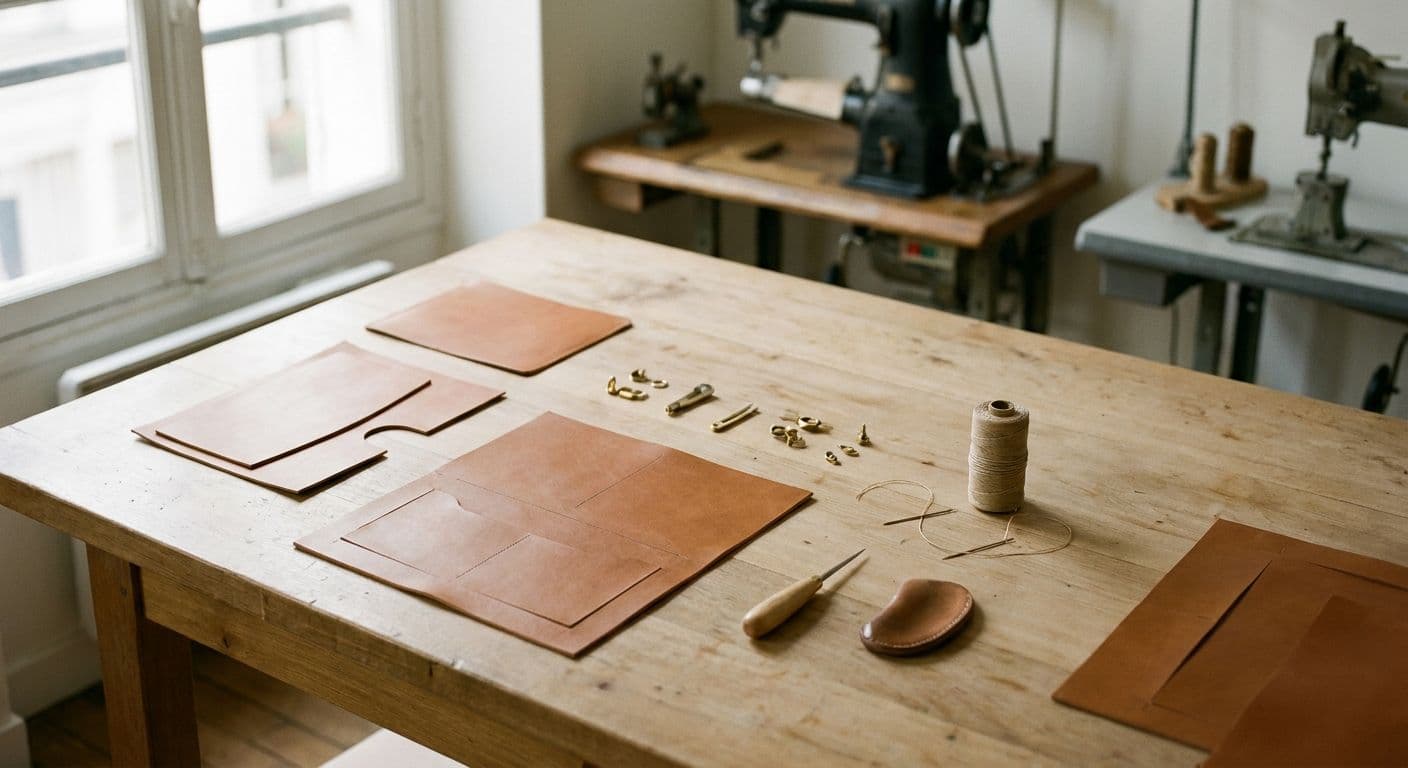
The question comes up often. It is a fair one. Suki Paris is a house in the 17th arrondissement, whose workshop is on rue Labie. The leather comes from Europe. The pieces are made by hand, on the premises. Nothing in the production is Japanese.
The name is not a geographical claim. It is a stance. That of making things one truly loves, without trying to make them into more than they are. A bag is a bag. Well chosen, well made, built to last. 好き.
French leather goods houses often bear family names or addresses. Suki chose a word. A feeling. That choice says something about how the pieces are conceived — not for a market, but for a taste.
Tokyo, the workshop next door
What moved us in Japanese craft was first an encounter through the objects themselves — the ceramics, the textiles, the kitchen knives. Not their exoticism. Their inner logic.
In a knife workshop in Sakai, in Kyoto or in Tokyo, beauty and function are never separated. A tool is beautiful because it is right. Not for decoration. The leather craftsman working on rue Labie recognises this logic. It is universal. It crosses borders.
Tokyo is not a model to imitate. It is a confirmation that what we seek to do here makes sense elsewhere, in other forms, in other materials.
Wabi-sabi, without saying so — what we carry from Japan into Suki leatherwork
Wabi-sabi is a Japanese aesthetic that is difficult to translate. It values imperfection, the trace of time, the modesty of materials. A chipped tea bowl. Wood that silvers with age. A patina.
At Suki, we do not invoke wabi-sabi. But the vegetable-tanned leather worked in the workshop operates on exactly this logic. It is not made to be perfect when it leaves. It is made to become something better after a few years of life. The wear marks, the tonal variations — these are not flaws. They are proof.
The Altaï and Ulysse bags illustrate this better than any argument could. A leather that gains presence with time. Not a fixed object — a living one.
Paris remains Paris — why everything is made on rue Labie
Suki is an entirely Parisian house. The leather comes from Italy. The pieces are cut, sewn, assembled and finished in the 17th arrondissement workshop, on rue Labie. No subcontracting. No outsourced production.
This choice is not a communication strategy. It is a constraint willingly accepted. Making everything in-house slows things down. It forces choices. It prevents producing too many styles, inflating collections, filling boxes for platforms.
It is also what allows us to know each piece. To know exactly where the leather comes from, how it was tanned, how long it dried. That level of control cannot be outsourced.
Rue Labie. Paris 17ᵉ. 好き.
Suki meaning: what the name says about how we regard the pieces we make
A brand name is a decision. Sometimes commercial, sometimes accidental. Here, it is an editorial decision. Suki meaning: to love what one does, to love what one chooses, to love what one gives.
Every piece that leaves the workshop has been handled, verified, decided upon. Not in a logic of volume. In a logic of taste. That is what 好き expresses in two syllables — an attentive presence to what one makes.
This is not a contradiction between Paris and Japan. It is a conversation between two ways of thinking about care for things. Two latitudes, one question: do we truly love what we make?
At Suki, the answer is in every stitch.
QUESTIONS FRÉQUENTES
Tout ce que vous voulez savoir
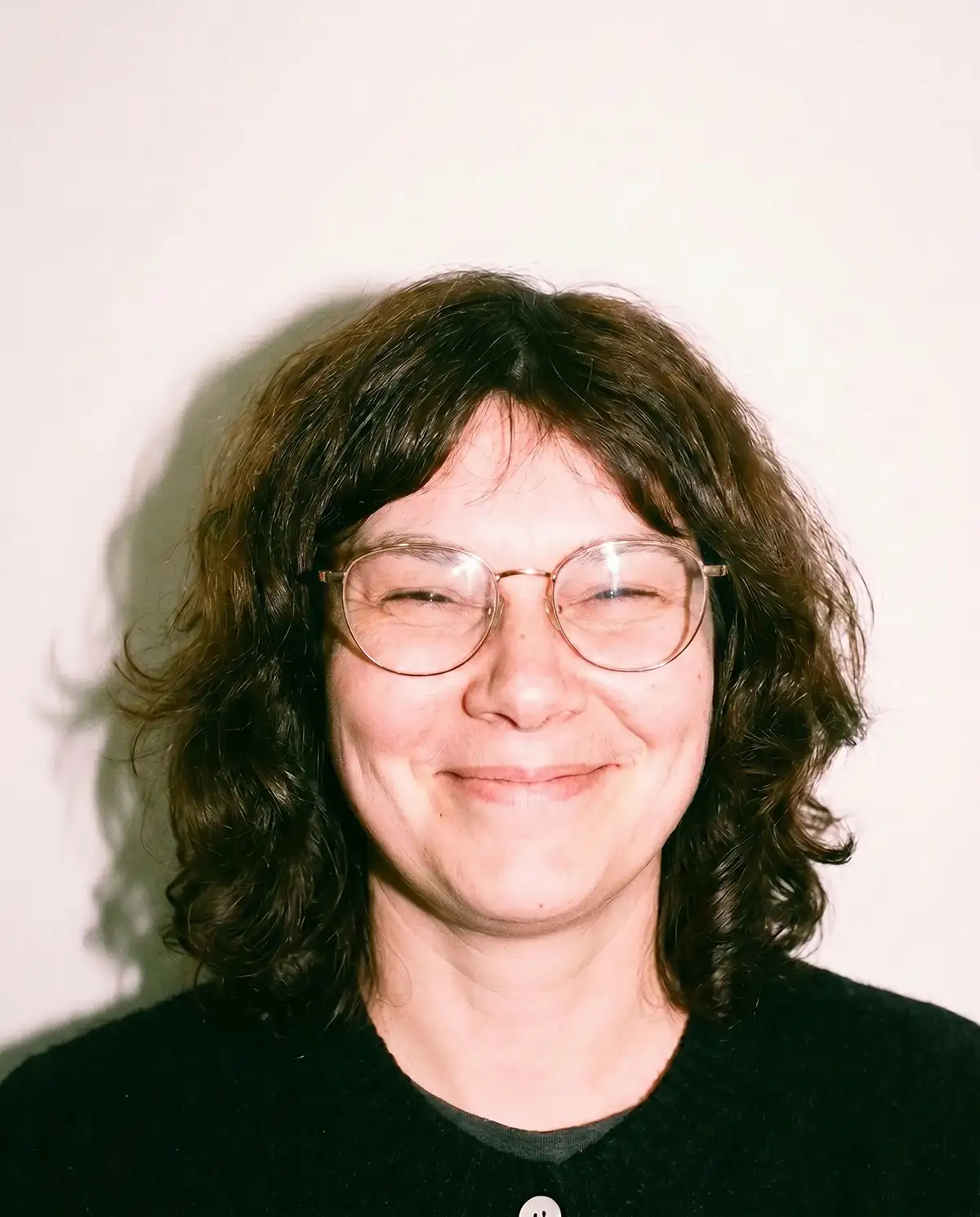
FOUNDER & LEATHER ARTISAN
Amandine Simon
Founder of Suki Paris, Amandine crafts every piece by hand in her workshop in the 17th arrondissement.
IN THE SHOP